What makes a business transfer successful?

03 November 2026 by National Bank
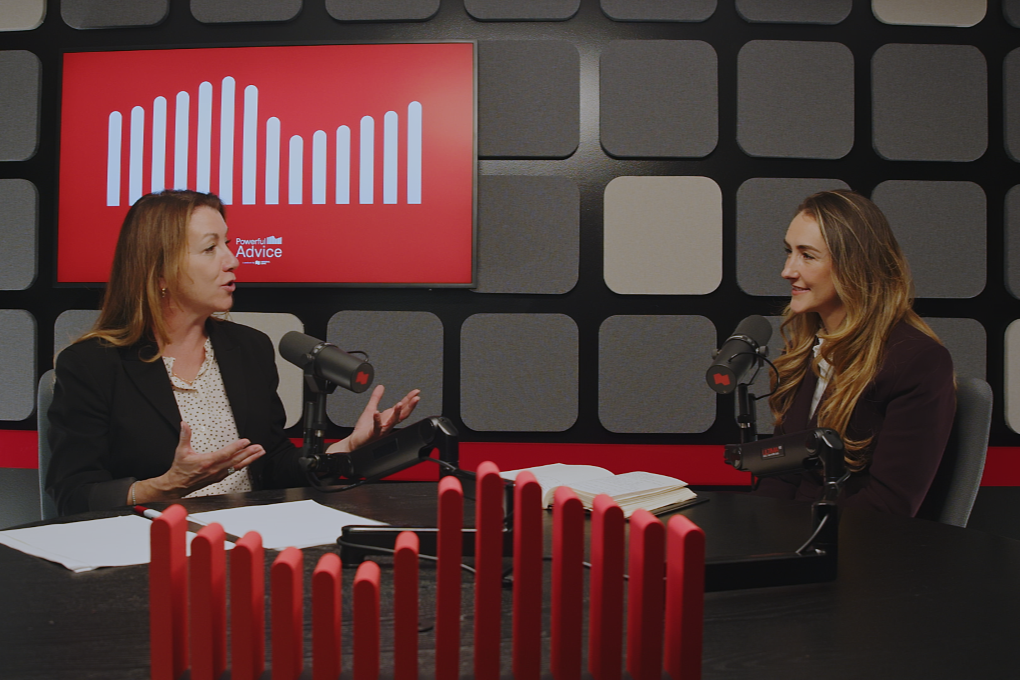
NBC Wealth Management EVP talks about retirement income with an Advisor

A successful business transfer is about more than achieving the highest sale price. From finding the right buyer, securing financing, managing integration, and protecting the company’s legacy, long-term success depends on creating lasting value for employees, clients, buyers, and sellers alike.

Beyond the sale price: What makes a business transfer successful?

In this episode of Powerful Advice, Nancy Paquet is joined by Caitriona Geoghegan, Vice President, Head of NCG, Commercial & Private Banking – Ontario at National Bank, to break down what goes into a successful business transfer.  
 
They explore Daniel’s situation as a case study. Daniel is 66 and is considering the future of the manufacturing business, its 100 employees, and its role in the community. He’s now exploring the true value of his company beyond the sale price as he evaluates potential buyers.  
 
Afterwards, Paquet and Geoghegan discuss how two young entrepreneurs should approach their first major acquisition. Using their experience and expertise, they break down how financing, considering all scenarios, culture, and integration can shape the success of a business transfer. 
 
Watch the full episode for more business transfer insights:

15 mins 19 secs Transcript

A business transfer is one of the most important decisions a business owner can make, with implications that extend far beyond the transaction itself. This article explores the factors that help create lasting value for both buyers and sellers throughout the transfer process.

What makes a business transfer successful?

A successful business transfer starts by aligning the seller’s financial, personal, and legacy goals with a buyer who can provide financing, manage the day-to-day and long-term operations, and smoothly integrate into the company.

The success of the transfer should be measured after closing by looking at how the business is progressing following the move. 

3 factors to look at to evaluate the success of a business transfer:

  • The buyer’s progress towards strategic and growth objectives
  • Employee integration and continuity
  • Client response and business performance

Closing day as a milestone

A business transfer doesn’t end when the deal closes. Long-term success depends on how well the business adapts to new ownership, keeps key employees and clients, and continues to deliver value for both the buyer and the seller.

“A successful transaction, when you’re looking from a year on, is that the company was able to move forward confidently.”

- Caitriona Geoghegan

What should business owners know before transferring their business?

When should you start planning? Planning should begin well before the intended exit date. It could take several years to sell or transfer a business, so it’s important to be prepared. 
What are the main transfer options?  The main options include selling to a family member, management or employee buyout, strategic buyers, private equity, and a partial sale.
Which specialists may be involved? Experts specializing in M&A, business valuations, taxes, law, accounting, and wealth management may be involved in the process.

Is the highest offer always the best offer?

The right buyer isn’t necessarily the one offering the highest price. A seller should compare the certainty and structure of the offer with the buyer’s financing capacity, leadership approach, plans for the company, and alignment with the seller’s other non-financial priorities.

Defining seller priorities: What should the business transfer preserve?

As the seller, you should identify what your priorities are for the future of your business. This will help you pick the right buyer and decide whether you’re willing to settle for a lower price for a better fit. 

Here are some factors you should explore during the planning process:

  • How important is maximizing the sale price?
  • Do you want to continue to be involved?
  • Which parts of the company culture should stay the same?
  • How important is employment continuity?
  • What outcome do you want for clients and suppliers?
  • How much does the company’s community presence matter?
  • What would make you feel like the business is in good hands?

Let’s take Daniel as an example. It was important to him that he passes his business down to his kids, rather than seeking out a strategic buyer, or private equity option. While he didn’t end up transferring the business to his family, he was able to preserve the company culture and community impact. Business owners looking to sell their business should take the time to understand what matters to them.

→ How business valuation works: What business owners and buyers need to know

How do you find a buyer who aligns with your business goals?

A successful business transfer often depends on finding a buyer whose vision for the company aligns with the seller’s goals for its future, including its culture, employees, clients, and long-term growth.

To help evaluate the quality of the buyers, use the questions you explored to determine your priorities as discussion points with the potential buyers.

  • What is your long-term vision for the company? 
  • What changes do you expect to make?  
  • How will the acquisition be financed?  
  • What experience do you have integrating a similar business? 
  • Which elements of the company’s identity do you intend to preserve?

What should a first-time business buyer consider?

First-time business buyers should define the strategic purpose of the acquisition, decide whether they can support the financing, and prepare to manage the operational and cultural work needed after closing the deal. 

Some strategic goals that may motivate the desire to buy a business:

  • Accelerating growth
  • Entering a new market
  • Acquiring client relationships
  • Adding a related product, service, or capability
  • Combining complementary businesses

Using the podcast, we can use the two entrepreneurs buying Daniel’s business as an example. They looked at this as an opportunity to bring their business and Daniel’s together to accelerate growth. This was their first major purchase, and it was a strategic one designed to position themselves as strong players going forward.

Evaluate the readiness of the business you want to acquire by asking the following questions:

  • Does the leadership team have the capacity to manage the transaction?
  • Which employees, clients, and capabilities are essential to retain?
  • Which processes and structures are vital to the business’s operations?
  • Are clients happy with the transfer?
  • In the case of an M&A: how compatible are the organization's’ cultures and operating models?

How should acquisitions be financed and stress-tested?

Before securing financing for a business acquisition, buyers should evaluate how the transaction will affect cash flow, debt obligations, and the company’s ability to manage integration costs. It's important to assess not only whether the acquisition can close, but also whether the combined business can meet its financial commitments and remain resilient under less favourable conditions.

When discussing financing options with financing specialists, buyers should evaluate:

  • How additional debt may affect leverage and financial stability.
  • Whether projected cash flow can comfortably support debt repayment.
  • The timing, likelihood, and value of expected synergies.
  • If the potential impact of losing a major customer or revenue source is significant.
  • How economic shifts, market volatility or industry changes could affect performance.
  • Whether the business will retain enough financial flexibility during the integration period.

Why does integration matter after closing?

A successful business integration extends beyond the closing date. Integration is the process of aligning employees, culture, operations, clients, technology, and financial practices to create a single, stronger organization. Even a strategically thought-out and well-financed acquisition can fall short of expectations if the integration plan isn’t executed properly.

During the first year after closing, buyers should watch critical areas to ensure a smooth integration, such as:

  • Communicating effectively with employees and retaining key talent.
  • Defining leadership responsibilities and decision-making processes.
  • Addressing any cultural differences between organizations or administrations.
  • Maintaining strong relationships with clients after closing.
  • Aligning operational processes, systems, and tech platforms.
  • Integrating financial reporting, controls, and cash management practices.
  • Tracking the delivery of expected synergies.
  • Monitoring debt levels, financial performance, and liquidity.

What’s the role of the seller after closing?

The right role for the seller depends on the transaction. A seller can agree to leave completely at closing, remain onboard for a handover, or retain a certain percentage of ownership. All expectations, decision rights, timing, and ownership agreements should be decided ahead of time.

Address the seller’s role by answering the following questions:

  • What knowledge or relationships need to be transferred?
  • How long should the handover period last?
  • What decisions or power will the seller retain after closing?
  • How will the seller’s involvement change over time?
  • Is it beneficial or detrimental to the company to keep the seller involved?

How is a successful business transfer measured?

Closing the deal should be seen as the first milestone. A successful business transfer is one that continues to deliver value for the business, its employees, its clients, the buyer, and the seller.

After the closing date, buyers should check in on the various aspects of the business to ensure everything is operating properly.

Perspective Signs of progress
Business The company is running smoothly and taking steps to achieve its goals.
Employees Key talent is retained, and employees are integrating seamlessly into the new organization.
Clients Clients continue to be supported and respond positively to the new ownership. 
Buyer The acquisition supports the buyer’s strategic and growth objectives.
Seller The seller received the funds and feels that the company and its legacy are in good hands.

Are you debating selling your business, or considering an acquisition? Our business transfer specialists offer in-depth expertise to help coordinate a smooth transition.

Who should inherit a company that represents a lifetime of work? When we talk about business succession, we often talk about a deal, a seller, a buyer, a price to negotiate. But behind every business transfer, there is so much more than that. There is trust, preparation, succession, and sometimes very difficult conversations and decisions. Welcome to Powerful Advice. I am Nancy Paquet, Executive Vice President, Wealth Management at National Bank of Canada. And we are talking about life and wealth in this podcast. So today I have the privilege of being with Caitriona Geoghegan. So Caitriona, thank you for being here.


Thank you so much for having me, Nancy. It's a pleasure.


Yeah. So Caitriona, you're Head of National Client Group, Commercial and Private Banking for the entire province of Ontario.


Yes.


Quite impressive.


Thank you so much. I really love my job. It's an amazing opportunity to support, you know, Canadian entrepreneurs, owners, families, and we get to bring lots of advice to the table for them as they're going through some really interesting transitions in their, you know, careers in their life and their business. So it's really great to get to come and talk here about that today.


So we're going to have a real case today. We're going to be talking about Daniel. So Daniel is 66 years old. He's built a manufacturing company. He's built in a community, right, 100 employees or so.


Yes.


He always thought that the family, the kids would take over. And now it turns out that it might not be what's happening. So he's coming to you and to your team and saying, what should I do? Should I sell to a competitor? Should I sell to a private equity? Could I find buyers that would continue, because for him, the continuity of his company, of the culture, probably protecting the jobs of those 100 families that depend on the salary they make is very important. So tell me about Daniel, how you brought him to the next step.


Absolutely, yeah. And I think, you know, your comment is that, you know, this is probably happening more often than not. And the answer is that yes, this is absolutely the case. You know, there's also just a massive amount of business transitions that are happening right now. I think over the next 10 years, 3/4 of Canadian business owners will exit their businesses. And this is part of the big wealth transfer that we're seeing as well. And it's been happening already. So, it's a very common situation that we're dealing and talking with owners that are transitioning and selling their business. Very often, you know, family run businesses, they want to keep it in the family. Like Daniel's case, he really wanted for his kids to take over the business. We hear this all the time, where, you know, our business owners will talk to us and say, you know, my kids, they've gone and they've done the university thing. They're now working at an accounting firm, a law firm or in another business, but they're gonna come back in the business and this is exciting for me. And then when these conversations don't really ever get ironed out, and we're, you know, very last minute thinking a year before the person wants to retire or exit, that maybe this is not going to happen. You know, it's a difficult conversation for sure for the owner and for their family, but it's a very common one. And So what do we do in a situation like this? It's really about coming to the table and, you know, clarifying what's important to that business owner, you know, and what can we do to exit them from the business or, you know, create that wealth that they're looking to do or whatever the outcome is that they're looking to get. You know, whether that's private equity coming into the table, whether it's a strategic buyer, maybe a management buyout, maybe a combination of different things, but this is, you know, something that we would come to the table on and advise. And even outside of all of that, which is really selling the business, it's about what happens to that owner after they sell the business. You know, it's retirement, it's wealth planning, it's succession around, you know, taxation, intergenerational planning from that perspective, there's so many different patterns to it.


Philanthropy.


Philanthropy, exactly. So there's so many different conversations and what we do is we really bring the right advisors around the table so that we can, you know, figure out what's the next steps and where do we move forward from here.


And so obviously price is important. Every entrepreneur wants to maximize what they've created, but I'm sure that in Daniel's case and in many others, that's not the only criteria that they're looking for.


You're right, absolutely. I think sale price is really important because, you know, the owner wants to, you know, realize on the value of something that they've put their blood, sweat and tears into for many, many years. They want to realize on the value of that, but it's not the only thing. I mean, in Daniel's case in particular, and you mentioned this off the top, you know, really preserving the culture for those employees and families that ran this business for him over many years, really important. The cultural elements, who he brought to the table to take over from him in this business, to preserve that and to preserve the community impact and to preserve all of his legacy basically that he had built. That was really important and so when we were considering the different potential options of who would buy this business, all of that was taken into account. Absolutely.


So how do you guide entrepreneurs like Daniel in exploring all those options? You know, you probably have so many questions to ask him. How do you go by.


Absolutely. And I think, you know, in these types of conversations, when people say, well, there's so many different ways that this could go, that's really annoying to hear really, isn't it.


It depends, like in financial planning?


So I'm not sure. Exactly, but it kind of does depend. So I think, you know, we think about it in sort of three different steps almost. The first thing is clarifying, you know, what is the objective here? You know, from the family's perspective, from, you know, what does that owner want to see for, you know, for the next generation within their family? What do they want to see in terms of the type of person who takes over the business? Like what is the successful outcome for them in terms of selling their business? So that's number one. Once you determine what that is, then it's, you know, what does the universe of buyers for this business now look like? Or if you don't want to sell the entire business and you want to stay involved in it somehow, you know, do you bring in somebody that potentially is, you know, a minority owner of the business or a majority where you stay in as a minority owner, there's so many different options that can exist. So we'll bring strategic buyers to the table. We'll bring private equity, we'll consider things like a management buy out if there's, you know, great employees that want to stay within the business, employee ownership, even options. These are all things that we can think about. And once the owner decides, yeah, that's the route that I think I want to take, then it's about bringing all of the right advisors around the table. And at National Bank, I mean, we have the full gambit of different advisors that we need to bring to the table. So everything from our M&A team who can help on guiding, you know, the potential universe of buyers, how you prepare your business for sale. Even our commercial bank who can help to finance if necessary, you know, for growth within the business ahead of that sale all the way to, you know, what happens with the proceeds of that sale on the other side. So our wealth teams and our advisors will come to the table to talk about that. This is a very important element of that. How do we prepare ourselves for the proceeds that we're going to realize and what are we going to do with those? So it's really bringing all of the right advisors around the table to help and starting early is super important. I will always say this.


I know people that, you don't do that the week prior you expect to retire.


Exactly, it's like when you're trying to sell your house, right, like you don't just put it up on the market for sale without considering lots of different options, like do I need to paint the living room right? Like there's different pieces in terms of creating value within the business ahead of making that sale as well.


So in this case, particularly Daniel found two young buyers.


Yes.


Who were interested in buying the entire company. So this is a shift now we go from Daniel selling to the buyers' mindset. So how do we help buyers in those situations?


Absolutely, I think, you know, we have, we see transactions on both sides of the transaction, basically, on the buyer side, I mean, these were two young enough entrepreneurs as well that had built a similar business and we were supporting that company, you know, as their house bank. You know, we were providing financials, you know, lending. We were, you know, managing their cash management, you know, dealing with all of the company related items as well as supporting them on the personal side with their, you know, family planning and what they wanted to do was really, you know, accelerate their growth within the business. This was something that they came to us and talked to us about and so similar to thinking about succession, it's about planning again what are we looking to do here? Are we looking to, you know, create growth and momentum? Are we looking to buy client lists? Are we looking to, you know, expand geographically? What are the things that are important? And do we want to have a bolt on acquisition to this business that is in, you know, maybe a related business or something that we don't have a capability in right now? So we will sit down with our, you know, companies that are considering making acquisitions and think through all of these types of, you know, scenarios and help them to identify other companies that might be of interest to them because we deal with such a large universe of companies on the M&A front, you know, we will often be well aware of companies that are interested in selling and companies that are interested in buying. And so we can even connect businesses. And that's exactly what happened in this scenario here. So it's really about acceleration. It's about bringing advice to the table. It's about helping that company prepare for what they need to do when they're going to make that acquisition as well.


And for those two young entrepreneurs, it was their first real purchase of a company. So what would be their biggest concern in doing their first major purchase like that?


Yeah, it's very daunting, honestly, for anybody to make a large first acquisition. I mean, even, you know, the strongest operators of businesses, an acquisition is a whole new skill set really, it's a lot to take on. Integrating a business is really a beast of a project to do.


Yes.


And there's a lot of things to consider. You know, it's everything from, you now need to take on, more than likely, additional financing to, you know, to finance that acquisition. So now you have a higher amount of leverage on your balance sheet and there's a lot of things that need to be produced upon to make sure that this is a success you know, there's synergies that when you're bringing two businesses together that you're expecting to be able to realize upon, will the cash flows of the business be something that are suitable and feasible to make this happen and for us to pay down our debt. There's the integration piece from a cultural perspective as well. You know, they're, you're bringing on a brand new business, you know, with different employees, possibly, you know, an owner along with that.


It's still different, right?


Yes, exactly. You know, it can be quite daunting. There's so many different pieces to it. And so I would say like the biggest concern is usually, you know, people are wondering, can I do this? You know, this is something that is completely outside of my skill set right now. So we're there to support and to help companies and guide them through, as bankers when we're providing financing to a company, we think about the down case scenario, you know, what if this happens in the economy or what if you lose your largest customer, you know, what are all of these, like, how do we think through these types of scenarios? You know, as lenders, this is something that we would do for our own internal analysis and we'll talk about and share that with the business so that we can all work together and be comfortable with the integration of that business.


So beyond the financing aspect, how do you support the entrepreneurs when they move through the succession planning and how long do you stay?


Yeah, I think when it comes to supporting the owners through the succession planning, you know, we have this large team of advisors that hopefully, if it's done right, have been there from very, very early on, well before any sale of the business is going to happen through to, you know, supporting them all the way on the other side through their retirement and helping to advise them through, you know, what they're doing with their wealth after the fact. So when you think about the ecosystem and, you know, supporting both on the succession side as well as, or on the, sorry, on the sales side, as well as on the, you know, acquisition side, on the sales side, you're bringing around the table, you know, like I said, the M&A advisors, the commercial bank, you know, the tax experts, the wealth planners, and all of these are part of a coordinated discussion. It's like everybody's reading off at the same playbook in order to make sure that we're supporting that company and that owner to do what they need to do and having that be coordinated is super important. And on the acquisition side, like I was telling you, it's, you know, really helping to support through analyzing of what the integration of the company can look like and really supporting through all of that transaction and thereafter as well. So I think it's, in the right scenario, we're supporting them through the entire process from different elements.


So when do you consider that a transaction is, you know, there's a closing day, but how long does it take for you to say, wow, that was a great success? For you or for your clients? Right?


Yeah, I think, you know, on closing day, it's one thing, you know.


Yes, it's jumping.


We got it over the line, pop the bottle, you know, we have, we've gotten the sales price that we wanted, etcetera. A successful transition. You know, it depends from whose perspective as well, of course, but from, my perspective, I would say, you know, a successful transaction when you're looking another year on is that the company was able to move forward confidently. You know, the employees were integrated well, the business is going well. The clients have, you know, really appreciated the new ownership. You know, the buyer of the business is really happy that they were able to realize on their ambitions to buy the business and they're now on a growth trajectory that's looking really good and they're happy about that. And the seller is really happy that, yes, they were able to realize on the sales proceeds that were what they had planned on. But also they're really happy that the business is now in good hands and their legacy lives on.


Yes.


Because again, like that's a really important part to this, you know, as entrepreneurs who really have built that business, they want to see that live on and to feel happy and confident. Especially in Daniel's case, that was something that was really important to him.


And now he can enjoy retirement.


Exactly.


If he can.


Exactly.


So, well, thank you so much. It was amazing to have you with us. I think we were able to illustrate clearly, you know what your teams can bring to the equation on the seller and the buyer side. I think we've seen also the importance of being well surrounded many years prior to this important transition.


Absolutely.


And to take the time to, on your part, to really understand Daniel's needs or the buyer's needs so that they can really feel confident that we're not just taking a recipe out-of-the-box, but we're really building something for them for their own reality. So I really want to say thank you. It was an amazing opportunity to learn more about what you do Caitriona.


Thank you so much for having me, Nancy.


And for all of you thank you for being on this podcast today. And we're going to be talking to you next month about something of life and wealth. See you soon.