
Retirement income: How to plan your withdrawals?

21 September 2026 by National Bank
NBC Wealth Management EVP talks about retirement income with an Advisor

As retirement approaches, the goal is no longer just to save, but to turn your wealth into a sustainable source of income. How can you draw on your assets while maintaining your lifestyle, taking tax, financial, and estate considerations into account? Every situation is unique, which is why a well-designed retirement withdrawal strategy can help you make informed decisions based on your plans and priorities.

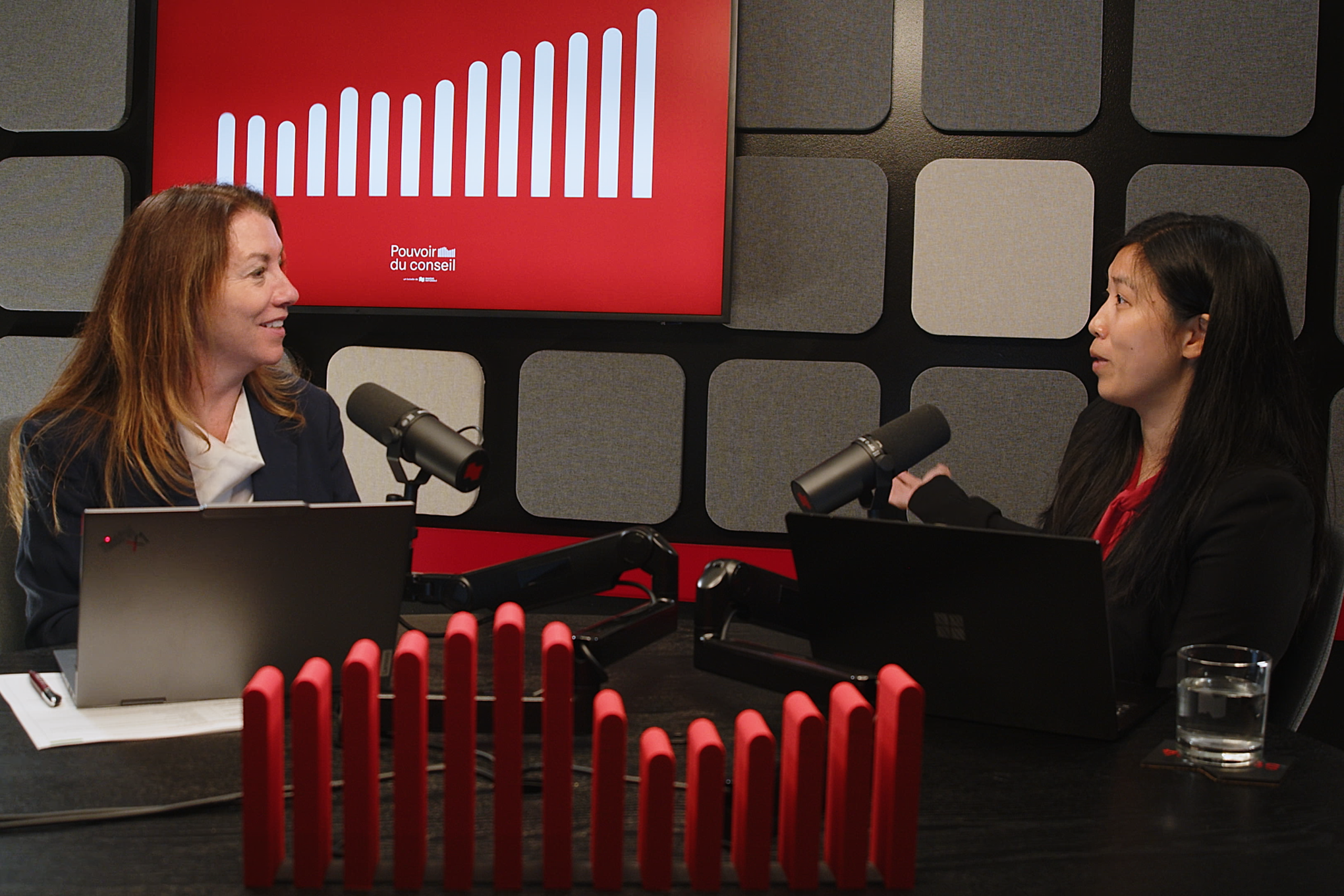
In this first episode of the podcast series Powerful Advice, Nancy Paquet, Executive Vice-President of Wealth Management, and Shan-Shan Chua, Expert Advisor at National Bank Private Banking 1859, share the story of Elisa and Mark. After a lifetime of hard work, Elisa has just retired, while Mark has recently sold his business. 

Together, they've accumulated significant wealth over the years. They’re now exploring how to make the most of it while maintaining their lifestyle and planning the transfer of their assets to future generations.

13 mins 2 secs Transcript

In this companion article, we explore the key elements of a retirement withdrawal strategy and highlight the questions to explore with your specialist as you prepare for this next stage with confidence. 

What is a retirement withdrawal strategy?

A retirement withdrawal strategy is about using the savings you've built to support the lifestyle you want in retirement. This involves gradually turning your assets into income by carefully considering which accounts to draw from first, how much to withdraw, and when to make withdrawals.

When well planned, this strategy can help you feel more confident about your retirement goals, while taking your financial situation into consideration.

How far in advance should you plan your retirement withdrawal strategy?

As discussed in the podcast, it's recommended to start planning your retirement withdrawal strategy two to five years before retirement. Starting early gives you time to review your strategy and prepare for this transition with greater confidence, based on your plans and circumstances.

Icône d'une baguette magique

Pro tip
Already retired? Don't worry, it's never too late to review your strategy. A few adjustments can sometimes make a real difference and help you move forward with greater peace of mind. 

What is a financial plan?

A financial plan is often the first step in creating a retirement withdrawal strategy that's tailored to your circumstances. More than just a projection of your savings, it gives you an overall picture of your situation, your goals, and the different strategies to consider. 

The example presented in the podcast highlights how this exercise helped Elisa and Mark confirm that they had enough to maintain the lifestyle they wanted in retirement. It also allowed them to explore different approaches to withdrawals, taxation, and estate planning based on their goals and plans for the future.

"For me, a financial plan is like a guide tailored to my clients' needs," emphasizes Shan-Shan Chua, an expert advisor at Private Banking 1859. It helps shed light on decisions related to retirement, taxes, and wealth transfer.

A financial plan may include: 

  • Your current financial and family situation 
  • Your short, medium, and long-term goals 
  • Your income and expenses 
  • Your assets and debts 
  • Your insurance coverage 
  • The tax implications of certain decisions 
  • Your estate-planning intentions
  • Different scenarios for how your wealth could evolve

Expenses to consider

To estimate your future needs, the analysis takes several types of expenses into account, such as:

  • Day-to-day spending
  • Housing 
  • Travel and leisure 
  • Healthcare and care-related costs
  • Financial support for loved ones, if needed
  • Potential one-time purchases
  • A reserve for unexpected events

Retirement income sources to consider

This process also provides an overview of the income sources that could support your lifestyle in retirement, including: 

  • Public pension plans
  • Employer pension plans 
  • Investment income 
  • Real estate income 
  • Income from a business or holding company 
  • Any other regular or occasional income

How do you know if you'll have enough money in retirement?

The projections used in a financial plan aren't based on arbitrary assumptions. They rely on industry-recognized return forecasts that are periodically revised to reflect changes in the economy and financial markets.

Because retirement can last for several decades, these projections take a realistic timeframe into account. They allow you to assess different scenarios and make adjustments that can help increase the likelihood that your savings will last throughout retirement. 

In the podcast, Shan-Shan explains that financial projections are based in part on projection assumptions of the Institute of Financial Planning (IPF), which are recognized standards in Canada. Using these assumptions and a realistic timeframe can help you assess whether your expected income will be enough to meet your long-term needs.

These assumptions can be used to estimate:

  • The potential growth of your investments 
  • The impact of inflation on your purchasing power 
  • Whether your wealth can support future expenses 
  • Different market scenarios over a period that could span several decades, including the risk of volatility

While no projection can predict the future with certainty, using recognized assumptions can help provide a more realistic framework for retirement planning. 

A financial plan can't eliminate uncertainty, but it can help you: 

  • Better understand your options and support your decisions
  • Visualize the potential consequences of different choices 
  • Assess your financial flexibility 
  • Adjust your strategy as your circumstances or goals evolve 
  • Ensure greater consistency among the recommendations of the different specialists supporting you

RRSPs, TFSAs, and non-registered accounts: Which should you draw from first?

There's no single solution when it comes to deciding which assets to draw from first. The best approach depends on your situation, goals, and needs. A retirement withdrawal strategy that's tailored to you can help you make the most of your wealth, today and for years to come. 

Here are a few things to consider: 

The order in which you draw on your assets depends on a number of factors, including:

  • Your current taxable income and the income you expect in retirement
  • The types of investments you hold
  • Your short and medium-term liquidity needs
  • Any mandatory withdrawals that may apply to certain plans
  • Your wealth transfer goals
  • Your spouse's or partner's financial and tax situation, if applicable
  • Your company and its structure, if applicable

An effective retirement withdrawal strategy is generally based on a comprehensive view of your financial situation rather than a one-size-fits-all approach. What works for one person isn't necessarily the best solution for another.

Elisa and Mark’s experience illustrates how a retirement withdrawal strategy needs to be tailored to each individual situation. In their case, the analysis suggests that delaying RRSP withdrawals and gradually drawing income from their holding company could be beneficial. This approach reflects their specific circumstances.

Source of funds Questions to consider
Cash What reserves should you keep for unexpected expenses?
Non-registered accounts What are the tax implications of selling your investments?
TFSA Should you keep this tax-free source of retirement income?
RRSPs or RRIFs What effect will the withdrawal have on your taxable income?
Private or workplace pension plan Is the income indexed, and what options are available?
QPP, CPP and OAS When should you apply for the public pension plans?
Holding company Is the income indexed, and what options are available?
Real estate Should the asset be kept, refinanced, or sold?

Why do you need to account for taxes in retirement?

In retirement, the amount you withdraw isn't necessarily the amount you'll have available to spend. Depending on the source of your income, some of your withdrawals may be taxable, reducing the income available for your expenses and future plans.

The example of Elisa and Mark also shows how planning ahead can sometimes help reduce the amount of tax you pay. Their different tax rates made income splitting a beneficial strategy for reducing their tax bill. In the podcast, a $30,000 transfer illustrates how a 10% difference in tax rates could result in annual tax savings of $3,000, depending on eligibility and the rules that apply.

Pictogramme ampoule qui s’allume

Good to know
Each situation is unique, so income splitting isn't always possible. The tax rules and legal structure need to be reviewed to determine which strategies may be appropriate for you. 

In retirement, every withdrawal decision matters. A tailored strategy can help you make the most of your savings while

supporting the goals and plans that matter most to you. Keep in mind: 

  • Different sources of income and withdrawals won’t be taxed in the same way
  • Your taxable income may vary from year to year
  • A large withdrawal at the wrong time can affect the amount of tax you pay
  • In some situations, splitting income between spouses can affect the overall tax outcome
  • Tax decisions should be aligned with your current income needs and long-term goals

Want advice tailored to your situation? Our experts are here to help you find the approach that's right for you. 

0:08 

Welcome to the first episode of our new podcast Powerful Advice. Here, 


0:13 

we don't only talk about money, we talk about journeys, decisions, 


0:17 

and what truly matters in people's lives. In each episode, 


0:21 

we will share real stories, stories of wealth and life. 


0:25 

But because behind every financial decision, every question, 


0:30 

and every intention, there is often a lot of uncertainties and 


0:34 

a lot of unknown. Today we will talk about an important 


0:38 

moment- 


0:38 

In someone's life, retirement. People want to know, will I be okay? 


0:43 

What does financial confidence really mean? 


0:48 

We also will bring you clarity in your decisions. 


0:52 

What is there to know in order to take the best decision in your reality? 


0:58 

I am Nancy Paquet, Executive Vice President, 


1:01 

Wealth Management at National Bank and today I have the privilege of being 


1:06 

accompanied with my colleague, Shan-Shan Chua. Welcome, Shan-Shan. 


1:11 

Thank you, Nancy. So Shan-Shan, you are an Expert, 


1:14 

an Expert Advisor at National Bank Private Banking 1859 and together we will 


1:19 

share a real case that you have advised. Yes. That's Elisa and Mark. So, 


1:24 

they are a couple who've been together for many decades and they do not have 


1:30 

children. Elisa has retired a couple of years ago 


1:33 

already. And for Mark, he told sold his business. 


1:37 

So, they built obviously significant wealth. 


1:39 

They have real estate, they have investments, 


1:42 

they even have a holding company, and they are wondering about this stage 


1:46 

of their life. So first, "Will I be okay? " as as I said in the intro. 


1:50 

Can they maintain their lifestyle? What lifestyle are we talking about? 


1:55 

What's the best tax decision, tax efficient way to withdraw the money? 


2:00 

So, can you give us a bit of clarity as to 


2:03 

what you said to Elisa and Mark? That's a lot of questions Nancy. I know. 


2:08 

Honestly, when they come to us at this stage, 


2:12 

they already have a good feeling of their wealth and, talking about retirement, 


2:17 

people are happy and they know one day, it's coming. 


2:21 

So they have spoken to you before taking the decision to retire? Yes, yes, yes. So, 


2:27 

that's definitely what we recommend to meet them before retirement. So, people- 


2:33 

Like Mark, they have been entrepreneur their whole 


2:37 

life. They've seen a lot of financial 


2:39 

statements, but a lot of times didn't even may not 


2:43 

have seen their balance sheets, just like assets minus debts. 


2:48 

So we are here to give them like the whole picture, 


2:51 

clarity on their own situations. It's been like 15 years that I started as 


2:57 

a tax specialist, like in about like 8 years more as a 


3:01 

financial planner. And honestly, it is very important to begin by 


3:05 

understanding their life, their intentions, 


3:09 

and what they want to do in the next steps,- 


3:12 

Which is- 


3:13 

A new adventure actually. So it's their adventure. Yeah. 


3:17 

And retirement, you know, it can last 30 years and even more. So, 


3:21 

people are reaching financial freedom younger now, 


3:25 

specifically entrepreneurs like your client here. So, 


3:28 

you've spoken about a financial plan a couple of times. What is it for you? 


3:33 

What is a good financial plan? Yeah, for me, 


3:36 

a financial plan is like a guide tailored to my clients' needs. So, 


3:41 

I always start by gathering information, talk, 


3:44 

have a discussion with them to know them better. 


3:47 

So I have a summary of their financial and family situations. 


3:52 

Then we take assumptions from the Financial Planning Institute, 


3:57 

which are the assumptions that we take Canadian widely and it's regulated. 


4:04 

We then do a projection of their wealth and they- 


4:09 

Are actually very surprised how compound interest can be over 30 years in a 


4:14 

projection. We also look at other fields in financial 


4:18 

planning. So we do, we look if there's any tax optimizations, 


4:23 

if they have any insurance needs, if they still need protections, 


4:27 

and eventually we'll look at the estate planning. And estate planning, 


4:32 

it's a word that makes people a little uncomfortable because you need to think 


4:38 

of when you will not be here anymore. So, - 


4:42 

How do you make sure that people can have that conversation with you and, 


4:47 

ideally before retirement or at least when you really start retiring? Yes, yes, 


4:53 

we, we do it step by step because obviously 


4:56 

you just started retirement and retirement is not an end. 


5:00 

It's actually a start. And estate planning is like another end, 


5:05 

but we start with the retirement planning for Elisa and Mark. 


5:10 

Actually their current question is how would I, like, 


5:14 

did I accumulate enough for retirement? How do, how do I withdraw my funds from- 


5:20 

All the assets that I have? You mentioned that they have a holding 


5:25 

company. They have personal non-registered 


5:28 

accounts, registered accounts. Real estate. Real estate, TFSAs, 


5:32 

they all have like different taxability rules. So, 


5:35 

how they withdraw funds and how they will use it during retirement is different. So, 


5:41 

for Elisa, Elisa and Mark, for example, they, 


5:45 

it was not beneficial for them to withdraw RRSP earlier because they 


5:49 

actually have a holding company. So they have more flexibility. 


5:54 

They can control the withdrawal and where the income at the personal level- 


5:59 

Arrives, and by discussing with them, I realized that Elisa actually worked in 


6:06 

Mark's business for more than five years. So when- 


6:11 

The spouse worked for the company, we can actually maybe do splitting income 


6:17 

like strategy. Another tax efficient way to withdraw 


6:22 

money. Exactly. So the projections were showing that 


6:26 

Elisa, and Elisa had actually like a tax rate, 


6:30 

an average tax rate about like 10% less than Mark. So over 30 years. 


6:35 

So if we were able to transfer $30, 000 of Mark's income to Elisa, 


6:41 

then that's like- 


6:43 

10% of it is 3000 tax saving every year. Yeah, very good. So, 


6:47 

without adding more efforts in the example you're giving us, 


6:51 

you know tax optimization is just beneficial and that's why we need a tax 


6:56 

expert like you. Yes, yes. But of course, we have to look at the corporate 


7:01 

structure and we have to confirm with their accountant and tax specialists at 


7:06 

external because they are the ones who structured their, 


7:10 

who actually did all the compliance about their work. 


7:14 

But those are definitely opportunities that we can- 


7:19 

Flag or we can suggest, if we see them. And then we explain to the client because 


7:25 

maybe sometimes, outsiders like the external accountants, 


7:30 

they are more busy and don't have the time to explain it in large. That's good. 


7:36 

We're complimentary. So,- 


7:38 

They want to enjoy life. They're retired. They don't want to add complexity. 


7:43 

They don't want to add stress for sure. So, we know now that they're okay, 


7:48 

they have accumulated enough assets. So, you bring the holistic view, 


7:53 

the example that you just gave. But here in their personal situation, 


7:58 

they did not have children. Usually, you know, 


8:01 

when we talk about estate planning, we think about, you know, 


8:05 

leaving some assets to the kids or to the grandkids. 


8:09 

But here they don't have children. So, how do you go about this conversation? 


8:14 

Yes, you're right. So, well, at first,- 


8:17 

There's complexity definitely retirement, we're not going to suggest to add more 


8:22 

complexity. So, we do the analysis, to financially see the pros and cons, 


8:27 

because it costs money if it needs restructuration for, 


8:31 

to be able to split the income. And so at that point, 


8:35 

if the tax savings is not material as opposed to the complexity and the fees to 


8:40 

put the structuring on and the time, then we just forget about it. 


8:45 

We keep it simple for their retirement. They have other interests and hobbies, 


8:51 

I'm sure. So, as for the estate, if they don't have children,- 


8:55 

A lot of, a lot of, clients are actually very close to their 


9:00 

nephews and nieces and other family members. 


9:03 

So they may want actually to gift them during their lifetime or at death. 


9:09 

But otherwise, there's also causes that may matter to 


9:13 

them like animals, pets, and very caring people that we have. 


9:17 

So usually there's charitable organizations for that they can, 


9:22 

so they can give to these organizations. And if we go further, 


9:27 

we can also talk about private foundation. So that way they can actually gift more 


9:33 

for a longer time,- 


9:35 

Even after death. So that's interesting because they think, 


9:39 

"Okay, I'll give the money", but it can last for decades after they 


9:44 

passed. Yes, definitely. It actually becomes a legacy of them. 


9:48 

So they, we often do that. Actually, we have, 


9:51 

we like to have this discussion about donations, organizations, 


9:56 

private foundations when they have, when they're selling their business 


10:01 

because of that year, most likely they will have a lot of like 


10:05 

a lot more income, capital gains for which we can use all 


10:09 

the charitable donation credits. And it's financially- 


10:13 

Beneficial to have donation credits, but it's actually, 


10:17 

it means that they can give more to these organizations as well. That's great. So, 


10:22 

the conversation in your perfect world should start when before retirement? 


10:27 

I would say two to five years before retirement and, 


10:30 

or at any time that they are unsure and they want to know what's going on in 


10:35 

their life. And, and even for a younger person, 


10:38 

you think about retirement because it's the strategy to aggregate assets, right? 


10:43 

So, I think retirement 5 to 10 years, definitely. 


10:46 

But it should be a conversation every time you meet your client, right? Yes,- 


10:52 

At all age. We do definitely meet more and more 


10:55 

younger people, especially a lot of startups, 


10:58 

entrepreneurs gets the funds, the company has a growth value like 


11:03 

growth really quickly in the past few years. So, if we usually, 


11:07 

if we take projections assumptions and saying that the growth will continue for 


11:13 

the next 40 years, the numbers are a bit, a bit over the board, but- 


11:19 

We would try to give more conservative- 


11:23 

Assumptions. But also we looked at what is their 


11:26 

future projects since like in their shorter term and for younger clients. 


11:31 

Good. So,- 


11:32 

Mark and Elisa story is a great story. So, thank you for sharing it with us. 


11:37 

What should we remember about this specific case? Well, first, 


11:41 

I think we should remember that they did very well. 


11:44 

Like I truly could like truly congratulate them and I'm happy with that 


11:49 

for them. And but it's important to know that 


11:52 

financial planning, it adds value to their situation, 


11:56 

to their wealth. It's not always monetary. For example, in their situation, 


12:00 

they had a good feeling about their situations, but they were not sure. So, 


12:05 

with the financial plan, we've brought up clarity and certainties. 


12:10 

We also test when we do the analysis, we test 1000 different markets scenarios. 


12:16 

So, for example, in their situation, it was really what was really all 


12:20 

positive results. So, if there's any market corrections, 


12:24 

they can continue to sleep and enjoy their retirement and it should get back 


12:30 

there. Their wealth should get back to the 


12:33 

projections usual. Well, thank you. So, thank you for sharing that. And as always, 


12:38 

you have to remember that this specific example that Shan-Shan shared with us is 


12:44 

specific to Elisa and Mark and definitely not a financial advice- 


12:48 

To your current situation. But please reach out to us and we will be 


12:53 

happy to to look at your situation so that we can provide advice. So, 


12:58 

thank you again, Shan-Shan for your insights and expertise. 


13:02 

Until next time. My pleasure, Nancy.